How to Build a Student Referral Program That Doesn’t Feel Pushy
TL;DR: Your happiest families can be your best source of new students, but nobody wants to feel like they’re constantly being asked to recruit their friends. A successful student referral program comes down to four things: asking at the right time, offering meaningful rewards, making sharing effortless, and tracking what turns into enrollments. Here’s how to build a referral program that grows your martial arts school or dance studio without making things awkward.
Your Best Marketing Team Might Already Be in Your Studio
Think about the last time a parent told you how much their child loves coming to class. Maybe they’ve noticed a boost in confidence, made new friends, or finally mastered a skill they’ve been working toward for months.
Now imagine that parent sharing the same excitement with a friend.
That’s the beauty of word-of-mouth marketing. It doesn’t feel like advertising because it isn’t. It’s a genuine recommendation from someone who already trusts your studio.
But there’s a catch: Hoping families spread the word isn’t exactly a growth strategy.
The solution? A referral program that makes sharing easy without making your families feel like salespeople.
Key Points for Studio Owners
- Timing matters: Ask when families are already excited about their experience.
- Keep rewards simple: Tuition credits, merchandise, or special experiences can go a long way.
- Remove the friction: Give parents a shareable link instead of expecting them to explain your programs.
- Don’t overcommunicate: Occasional, well-timed reminders beat constant promotional messages.
- Track actual enrollments: A referral isn’t a new student until they enroll.
1. Ask at the Right Moment, Not Just When Enrollment Is Slow
There’s a big difference between asking a parent for a referral after their child earns a new belt and asking when they’re rushing out the door.
One feels natural. The other feels like a sales pitch.
Look for moments when families are already celebrating:
- Belt promotions, tournaments, or rank advancements.
- Dance recitals, performances, or new skills mastered.
- Positive feedback about a child’s confidence or progress.
- Student anniversaries and other milestones.
Instead of saying, “We’re trying to grow enrollment. Do you know anyone interested?”
Try:
“We’re so proud of how far Emma has come! If she has any friends who’d enjoy trying a class with her, we’d love to welcome them.”
You’re not asking parents to sell your studio. You’re inviting them to share an experience they already love.
What to do: Encourage instructors and front desk staff to recognize these moments. They’re often the first to hear positive feedback, making them a natural part of your referral strategy.
2. Offer Rewards That Feel Like a Thank-You
Do you need to reward families for referrals? Not necessarily. But a thoughtful incentive can encourage participation and show appreciation.
The trick is making the reward feel like a thank-you, not a commission.
A few ideas worth considering:
- Tuition credits: Give families $25–$50 toward their next payment.
- Studio merchandise: Offer a branded T-shirt, hoodie, or other gear.
- Exclusive experiences: Reward referrals with a private lesson or special workshop.
- Give-and-get rewards: Offer both the referring family and the new student a small credit.
For example, a simple “Give $25, Get $25” program rewards both families when the referred student enrolls.
Just make sure the incentive makes financial sense for your business and that families understand when rewards are earned.
Remember, the reward should complement a great student experience, not replace it.
3. Make Referring a Friend Ridiculously Easy
Here’s where many referral programs lose momentum.
A parent wants to recommend your studio, but they have to remember your website, explain your programs, find your schedule, and tell their friend how to register.
That’s a lot of work for someone who’s doing you a favor.
Instead, make sharing as simple as sending a text.
Give families a referral link, digital guest pass, or QR code that takes prospective students directly to a page where they can learn more and schedule a trial.
Your landing page should handle the heavy lifting with clear program information and an obvious next step.
And if you’re using Market Muscles’ CRM, there’s an even easier option.
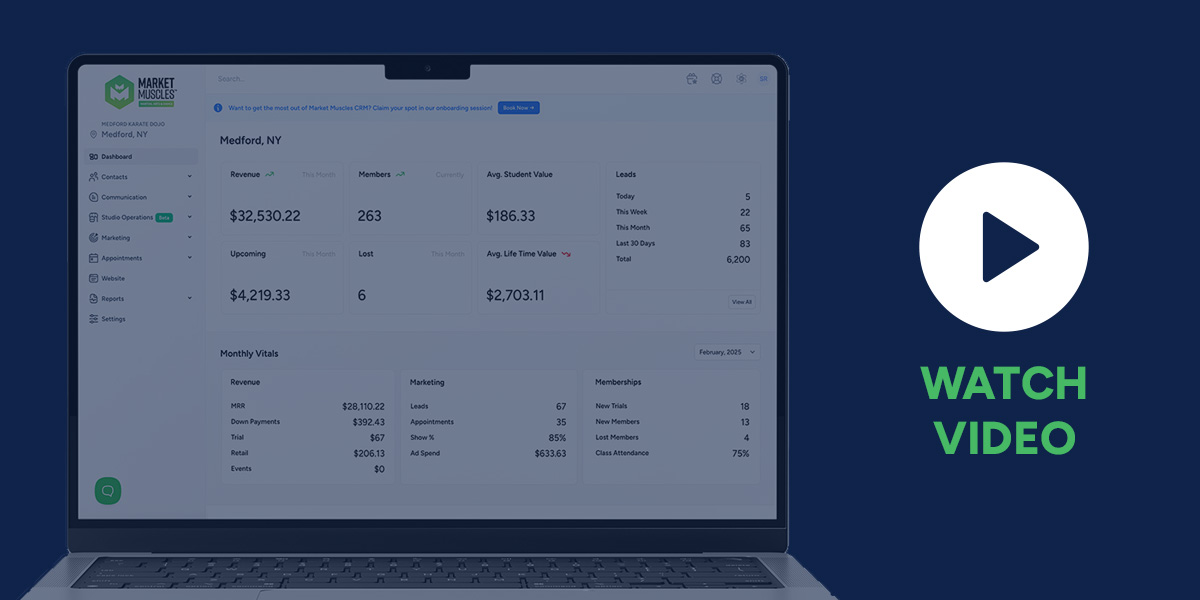
The built-in Referral Program allows students and families to share unique referral links directly from their Student Portal. When someone submits their information, the referral is automatically recorded and attributed to the family who shared it.
No paper forms. No guessing who referred whom.
Pro tip: Make sure the referral experience works just as well on a phone. Parents are far more likely to share a quick link than navigate a complicated registration process.
4. Keep Parent Communication Helpful, Not Repetitive
Nobody wants another weekly email asking them to bring in more students.
And if every communication feels promotional, families may start tuning you out.
Instead, weave referral reminders into messages you’re already sending:
- Welcome sequences: Introduce the program once families have settled in.
- Milestone celebrations: Invite students to bring a friend after an achievement.
- Monthly newsletters: Include a short reminder alongside studio updates.
- Special events: Host a Bring a Friend Week or beginner-friendly workshop.
Something as simple as this works:
“Know someone who’d love our classes? We’d love to meet them! Share your referral link, and we’ll thank you with a tuition credit if they enroll.”
Short, friendly, and completely optional.
With marketing automation and email & SMS marketing, you can build timely communication into your existing workflows without adding another task to your day.
The goal isn’t to send more messages. It’s to make the messages you send more meaningful.
5. Track Referrals That Actually Turn Into Students
Let’s say five new students enroll this month. Great!
But how many came from referrals? Which families recommended them? And how many referred prospects never scheduled a trial?
If you don’t know, it’s difficult to tell whether your program is working.
Fortunately, you don’t need a complicated spreadsheet to get started.
Focus on four numbers:
- Total referrals: How many prospective students were referred?
- Trial bookings: How many scheduled an introductory class?
- New enrollments: How many became paying students?
- Referral conversion rate: What percentage of referred prospects enrolled?
For example, if 20 people are referred and 8 enroll, that’s a 40% referral-to-enrollment conversion rate.
Tracking these numbers helps you understand what’s working and where families might be dropping off.
Market Muscles’ Referral Program includes referral tracking, conversion statistics, and a leaderboard to help identify your biggest advocates. Pair that with Lead Management, and you can keep track of new inquiries as they move toward enrollment.
And if referrals are coming in but enrollments aren’t following, your referral program might not be the problem.
As we explain in The Silent Killer of Studio Growth: What Happens When You Stop Following Up, generating interest is only half the battle. What happens after someone reaches out matters just as much.
Common Referral Program Mistakes to Avoid
Even a great idea can fall flat without the right approach. Watch out for these common mistakes:
Asking Too Often
Constant referral requests can make families feel pressured. Focus on natural opportunities and occasional reminders instead.
Making Rewards Too Complicated
If parents can’t explain your program in one sentence, simplify it. Clear incentives and straightforward rules encourage participation.
Forgetting the New Family’s Experience
A personal recommendation gets someone interested, but your website, first interaction, and trial experience still need to deliver. Make sure your lead-generating website makes taking that next step easy.
Failing to Follow Up
A referral isn’t automatically an enrollment. Respond promptly, answer questions, and make prospective families feel welcomed.
FAQs About Student Referral Programs
What is a good referral reward for a martial arts school or dance studio?
Tuition credits, merchandise, private lessons, and event discounts are all good options. Choose something families value that fits your studio’s budget.
When should I ask parents for referrals?
Positive milestones, such as belt promotions, recitals, or enthusiastic parent feedback, are natural opportunities. Keep the invitation casual and optional.
How do I promote referrals without sounding pushy?
Include occasional reminders in newsletters, milestone messages, and special events. Focus on inviting families to share their experience rather than asking them to help meet enrollment goals.
How do I know if my referral program is working?
Track referral inquiries, trial bookings, enrollments, and conversion rates. Review your results monthly to identify opportunities for improvement.
Turn Happy Families Into Your Biggest Advocates
The best referral programs don’t start with incentives. They start with experiences worth sharing.
When students feel supported, parents see progress, and families genuinely enjoy being part of your community, referrals become a natural extension of what you’re already doing well.
Your job is simply to make sharing easy.
Market Muscles helps martial arts schools and dance studios do exactly that, with tools for managing referrals, organizing leads, automating communication, and turning more interest into enrollments.
Book a free demo to see how Market Muscles can help you grow your studio without adding more to your plate.